Best cross-border payment platforms for importers and exporters in 2026: HEVN, Wise, Airwallex, Mercury and Revolut compared by eligibility, cost and timing.
Best overall for importers and exporters who need a US account as a foreign company: HEVN. Best for multi-currency holding and wide currency coverage: Wise Business. Best for large platform-style treasury and global entities: Airwallex. Best for US-incorporated startups: Mercury. Best for teams already on a neobank workflow: Revolut Business. That is the 2026 shortlist for the best cross-border payment platforms for importers and exporters, ranked by the job each one does best.
TL;DR
- HEVN fits foreign-incorporated importers and exporters who need a US account and USD international payments in 2026.
- Wise Business fits companies that want to hold and convert many currencies in one account.
- Airwallex fits larger operators that need multi-entity treasury and local collection.
- Mercury fits US-incorporated companies, not foreign-incorporated ones.
- Compare total operation cost and recipient credit timing, not the headline fee.
Why this matters in 2026
An importer pays a supplier abroad. An exporter gets paid by a buyer abroad. Both lose money in the same places: conversion spreads, intermediary bank fees, and days of delay before funds are credited.
The headline transfer fee is rarely the real cost. The full operation cost includes conversion, third-party fees, and what the recipient actually receives. In 2026, that is the number to compare. Confirm current route-specific terms with each provider before you commit, because fees, directions and availability change by corridor.
What makes the best cross-border payment platform
Five criteria decide the ranking. Check them before you read the table.
- Eligibility: can a foreign-incorporated company open an account, or only a US-incorporated one? These are different cases and providers treat them differently.
- Total operation cost: conversion, intermediary and third-party fees combined, not only the platform fee.
- Recipient credit timing: how long until the supplier or your own account sees the funds.
- Corridor availability: which countries and rails (ACH, SEPA, SWIFT, local rails) are supported for your routes.
- Currencies held versus supported: some currencies can be held in a balance; others are supported only for funding or withdrawal.
Cross-border payment platforms at a glance
| Platform | Best for | Standout feature | Key limitation |
|---|---|---|---|
| HEVN | Foreign companies needing a US account | One reusable business profile, local currency funding, USD international payments | Not a bank; approval is not guaranteed |
| Wise Business | Holding and converting many currencies | Multi-currency balances | Verify eligibility and corridor terms for your company type |
| Airwallex | Larger multi-entity operations | Global treasury and local collection | Product scope suits bigger teams; verify fit |
| Mercury | US-incorporated startups | US-focused business banking workflow | Built around US-incorporated companies |
| Revolut Business | Teams already using Revolut | Familiar app-based account management | Verify business eligibility and supported routes |
Competitor details above are positioning summaries. Verify each provider's current eligibility, product scope and pricing before you decide.
1. HEVN: best for foreign companies that need a US account and USD payments
HEVN provides global business accounts and cross-border payment infrastructure across ACH, SEPA, SWIFT, UAE FTS and stablecoin rails. It is built for international merchants, traders and companies moving money across borders. HEVN is not a bank.
The core use case: a foreign-incorporated company that needs a US account, funds it in local currency, and pays overseas suppliers or receives USD revenue. One business profile is reused across accounts and routes, so you do not repeat onboarding for every corridor.
HEVN pros:
- Targets foreign-incorporated companies that need US accounts and USD international payments.
- Supports multiple rails (ACH, SEPA, SWIFT, UAE FTS) under one profile.
- Supported corridors include distinct UAE and Australia setups.
- Documentation-led onboarding with explicit compliance steps.
HEVN cons:
- Not a bank, and account approval is not guaranteed.
- Supported local funding does not mean a balance can be held in that currency.
- Availability and terms are route-specific; confirm before relying on a corridor.
- A US-incorporated company owned by a nonresident is a separate case with separate eligibility.
HEVN pricing: see the current terms on the pricing page. Confirm route-specific costs before quoting them to your finance team.
Best for: foreign-incorporated importers, exporters and commodity traders paying overseas suppliers and receiving USD.
Verdict: Buy if you are a foreign company that needs a US account and regular USD international payments.
2. Wise Business: best for holding and converting many currencies
Wise Business is a common pick for companies that want balances in several currencies and frequent conversions. It suits businesses that keep working capital in more than one currency and pay out in many.
Wise Business pros:
- Multi-currency balances for holding funds.
- Widely used for international transfers.
- Clear fee display before you send.
Wise Business cons:
- Eligibility and supported features vary by company type and country.
- Coverage of specific corridors and rails needs checking for your routes.
Best for: companies that want to hold several currencies rather than just pay out.
Verdict: Buy if multi-currency holding is the main job. Verify eligibility first.
3. Airwallex: best for larger multi-entity operations
Airwallex positions itself as global financial infrastructure for businesses, covering collection, payouts and treasury across entities. It suits operators with several legal entities and higher payment volume.
Airwallex pros:
- Built for multi-entity and multi-region setups.
- Combines local collection with international payouts.
Airwallex cons:
- Broader product scope can be more than a small importer needs.
- Eligibility and pricing depend on company profile; verify before applying.
Best for: larger exporters and platform-style businesses with several entities.
Verdict: Hold for small teams with one route. Buy for multi-entity treasury needs.
4. Mercury: best for US-incorporated startups
Mercury targets US-incorporated companies with a software-first business banking workflow. It is a strong fit when your company is already incorporated in the US.
Mercury pros:
- Designed around US-incorporated companies.
- Simple account management for domestic operations.
Mercury cons:
- Not the right starting point for a foreign-incorporated company.
- International payment depth for supplier-heavy trade needs checking.
Best for: US-incorporated companies with mostly domestic activity and occasional international payments.
Verdict: Skip if you are foreign-incorporated. Buy if you are a US company.
5. Revolut Business: best for teams already on Revolut
Revolut Business offers an app-based business account with international payment features. It fits small teams that already manage money in the Revolut ecosystem.
Revolut Business pros:
- Familiar app-based account management.
- Covers common international payment needs for smaller teams.
Revolut Business cons:
- Business eligibility, plan limits and supported routes vary; verify for your country.
- Trade-heavy supplier payments need a corridor-level cost check.
Best for: small teams that want one app for everyday business money.
Verdict: Hold until you confirm eligibility and your specific corridors.
How we ranked
The ranking follows the five criteria above, weighted toward eligibility and total operation cost. Importers and exporters who are foreign-incorporated rank platforms by whether they can actually open an account and reach their corridors. A platform with lower sticker fees but no route to your supplier ranks lower than one that gets funds to the recipient with a known total cost.
How to compare platforms before you switch
- Run one real quote per corridor. Ask each platform for the recipient amount on the same payment, same day.
- Add every fee. Conversion spread, intermediary bank fees and receiving fees all count.
- Check credit timing. Ask when the recipient is credited, not when you send.
- Confirm documents. Company registration, ownership details and proof of business activity are standard in 2026 onboarding.
- Separate company types. A foreign-incorporated company and a US-incorporated company owned by a nonresident follow different eligibility paths.
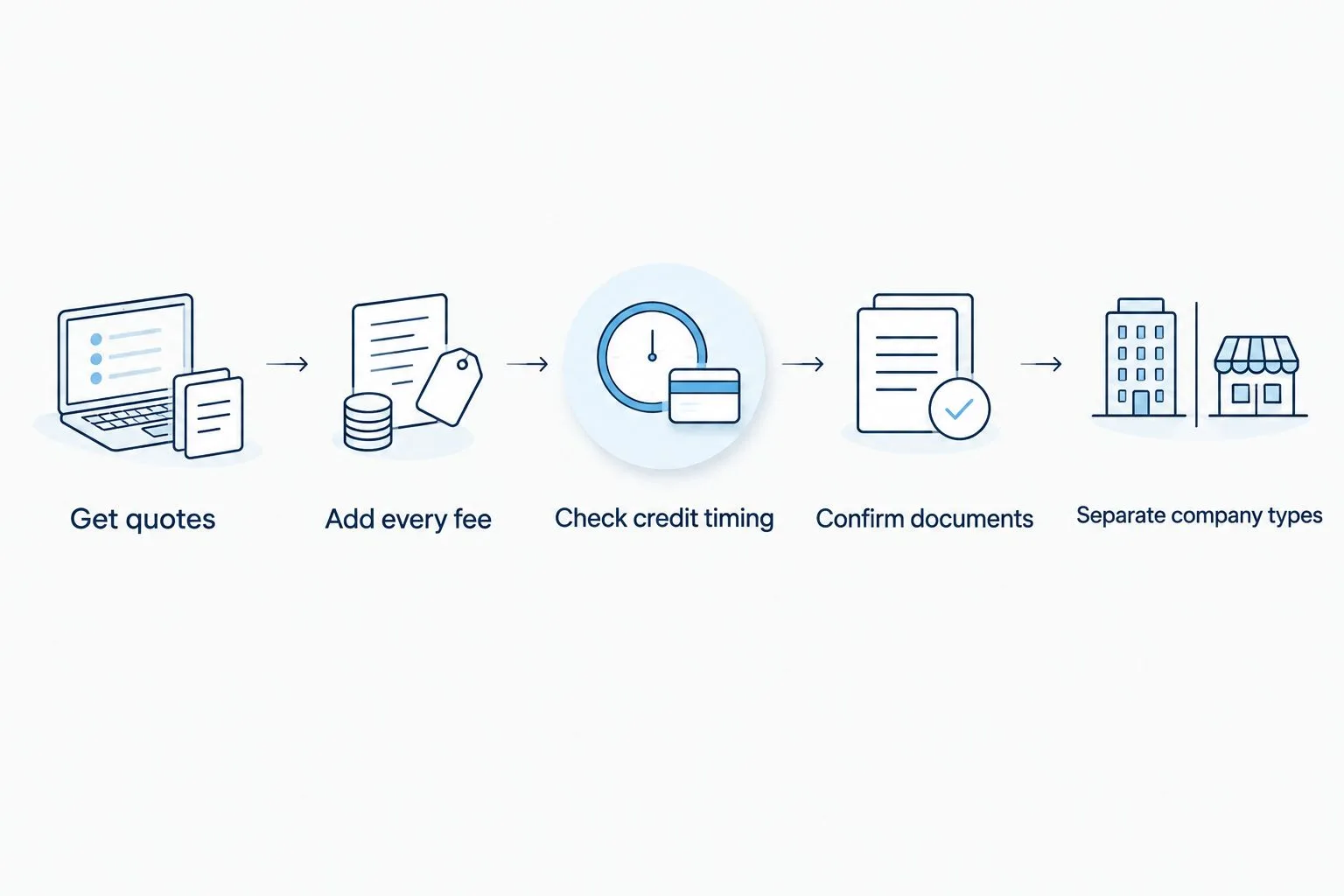
Compare recipient amount and timing on the same payment, not the headline fee.
Which platform should you choose?
Start with your company type. Foreign-incorporated importer or exporter that needs a US account and USD payments: HEVN. Need to hold many currencies: Wise Business. Running several entities at scale: Airwallex. US-incorporated and mostly domestic: Mercury. Small team already on the app: Revolut Business.
If you are undecided, request a recipient-amount quote from two providers for your busiest corridor and pick the lower total cost with acceptable timing.
Check HEVN costs for your route
Review current terms before you quote a supplier payment.
FAQ
What is the best cross-border payment platform for importers and exporters in 2026?
It depends on company type. HEVN fits foreign-incorporated companies that need a US account and USD payments; Wise Business fits multi-currency holding; Mercury fits US-incorporated companies.
Is HEVN a bank?
No. HEVN is not a bank. It provides global business accounts and cross-border payment infrastructure, and account approval is not guaranteed.
What should I compare besides the transfer fee?
Compare the full operation cost: conversion, third-party and intermediary fees, plus the amount the recipient receives and when it is credited.
Can a foreign company open a US business account?
Some providers support it, but eligibility varies. A foreign-incorporated company and a US-incorporated company owned by a nonresident follow different paths.
Does local currency funding mean I can hold that currency?
No. A currency supported for funding or withdrawal is not automatically a currency you can hold in a balance. Check each route.
Which payment rails matter for trade payments?
ACH, SEPA, SWIFT and local rails such as UAE FTS cover most trade corridors. Confirm which rails your supplier's bank accepts.
Are cross-border fees the same on every route?
No. Fees, speed and availability vary by corridor and direction. Confirm current route-specific terms before quoting a cost.
One last thing
The cheapest platform on paper is often not the cheapest in practice. Send the same payment through two providers' quote tools and compare what lands in the recipient's account. That one number settles most 2026 decisions.
Related guides: